Introduction
Most businesses spend their marketing budget trying to interrupt people – pop-up ads, cold calls, and banner advertisements that nobody asked to see.
Content marketing works differently. Instead of interrupting your potential customers, it attracts them – by giving them something genuinely useful before they ever spend a single rupee with your business.
Understanding how content marketing works is understanding that the businesses people trust most are the ones that helped them first. This guide explains exactly how content marketing works, why it builds trust faster than any other marketing approach, and how your business can use it to consistently attract the right customers.
What Is Content Marketing and How Does It Help Your Business
Content marketing is the practice of creating and sharing genuinely useful content – blog posts, videos, guides, social media posts, and more – that helps your target audience solve problems, answer questions, and make better decisions.
The fundamental principle behind how content marketing works is simple. When you consistently provide value to the people you want to serve, they begin to trust you. And when they trust you, they choose you when they are ready to buy.
Unlike traditional advertising, which pushes a sales message to an audience, content marketing pulls the right people toward your business by being the most helpful and trustworthy voice in your industry.
Why Content Marketing Builds Trust Faster Than Advertising
Trust is the foundation of every purchase decision. While advertising tells people your business is good, content marketing proves it by providing valuable information and solving real customer problems.
When people find helpful blogs, videos, or guides that answer their questions, they begin to see your business as a trusted expert. By consistently offering value before asking for a sale, content marketing builds stronger relationships and makes customers more likely to choose your business when they’re ready to buy.
The Different Types of Content That Bring Customers to Your Business
One of the most important things to understand about how content marketing works is that content is not one single thing. Different types of content serve different purposes at different stages of the customer journey.
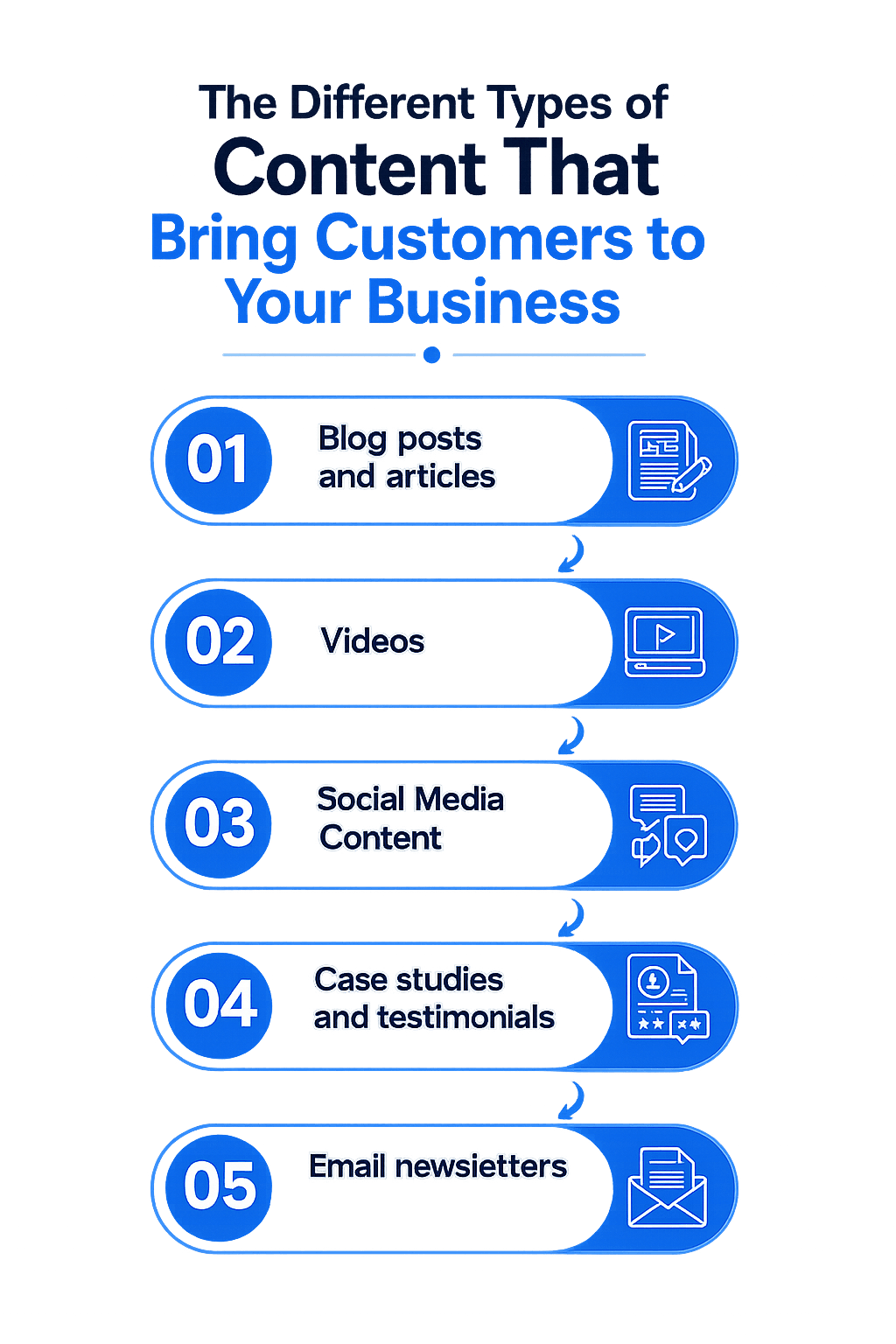
Blog posts and articles
Blog posts and articles attract people searching for information on Google. A well-written SEO-optimised blog post on a topic your target customer is actively searching for brings your website directly in front of them at the exact moment they need help.
Videos
Videos build the deepest connection of any content format. When potential customers see and hear a real person explaining something useful, they feel they know and trust that person far more than they would from reading text alone.
Social media content
Social media content keeps your brand visible and present in your audience’s daily life. Consistent, valuable social media posts remind your followers that your business exists and that you are the expert they should call when they need your service.
Case studies and testimonials
Case studies and testimonials demonstrate real results for real customers. When potential customers see that other people like them have trusted your business and achieved a positive outcome, their hesitation drops and their confidence rises.
Email newsletters
Email newsletters maintain an ongoing relationship with people who have already shown interest in your business. Regular, valuable emails keep your brand top of mind so that when a subscriber is finally ready to buy, your business is the first one they think of.
How Content Marketing Brings Customers to Your Business Step by Step
Understanding how content marketing works requires understanding the journey a potential customer takes from first discovering your content to becoming a paying customer.
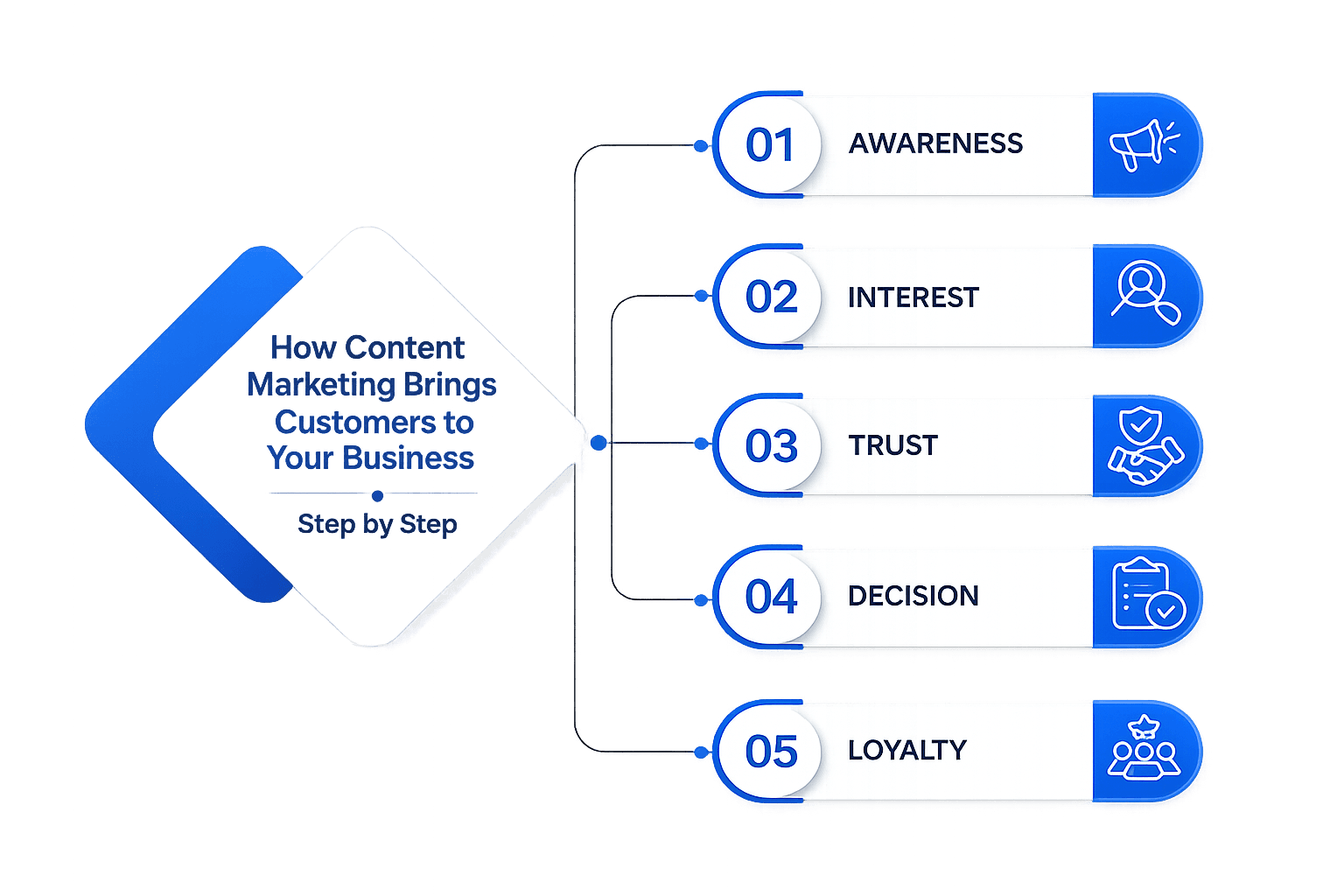
Awareness.
A potential customer has a problem or question. They search Google or scroll social media. Your content appears and provides exactly the help they were looking for. This is the first time they encounter your business, and the impression is immediately positive because you helped them without asking for anything.
Interest.
The potential customer finds your content genuinely useful and wants more. They follow your social media, subscribe to your email list, or bookmark your website. Your business has moved from unknown to known.
Trust.
Over time, your content continues to deliver value consistently. Every blog post, video, and social media update reinforces that your business knows what it is talking about and genuinely cares about helping. Trust accumulates with every interaction.
Decision.
When the potential customer is finally ready to buy, your business is the obvious choice. They already know you. They already trust you. The decision to buy from you feels natural and safe rather than risky.
Loyalty.
After the first purchase, your content keeps the relationship alive. Valuable post-purchase content and ongoing social media engagement turn a one-time buyer into a repeat customer and an advocate who recommends your business to others.
The Key Elements That Make Content Marketing Successful
Not all content marketing works equally well. Understanding how content marketing works also means understanding what separates content that builds trust from content that gets ignored.
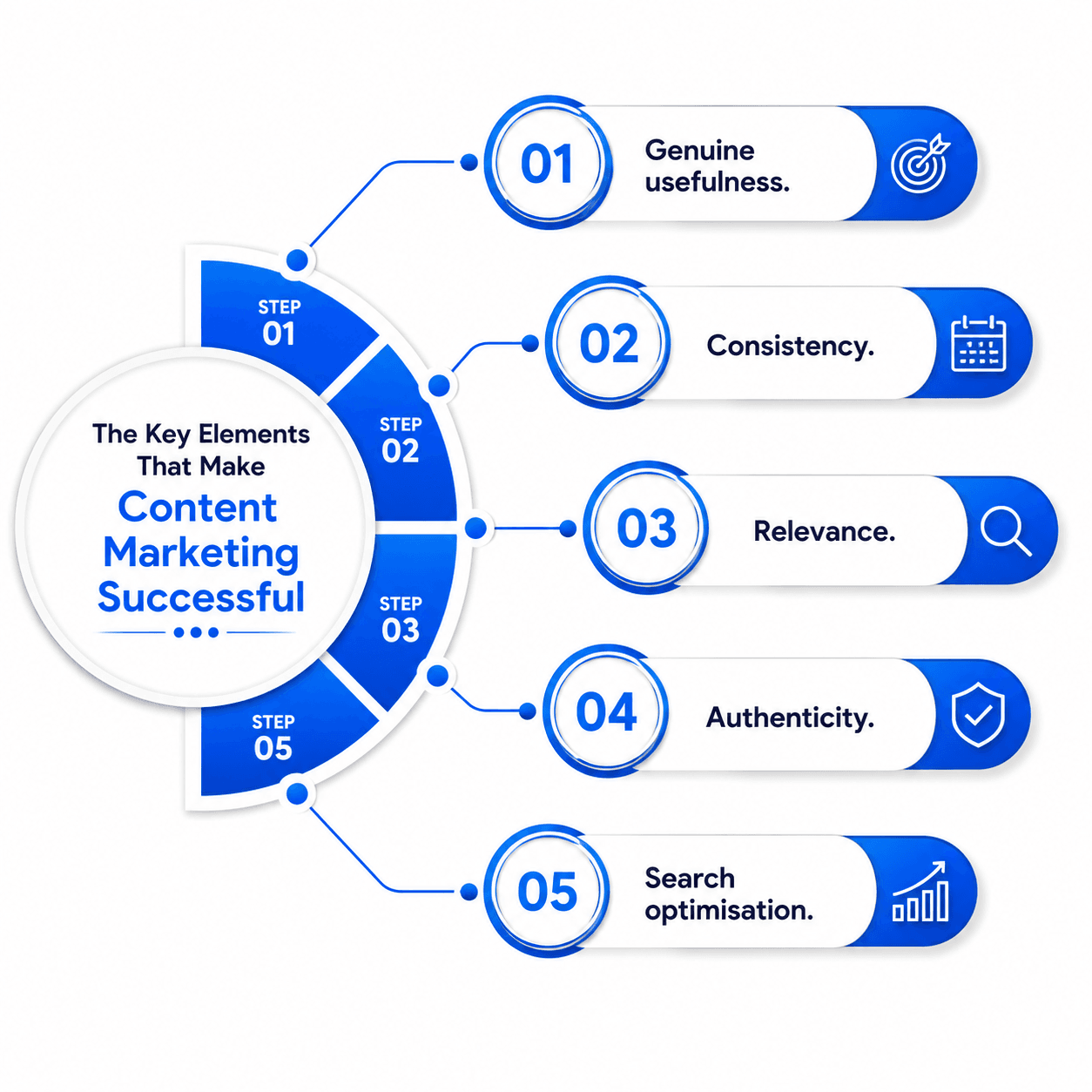
Genuine usefulness.
Content that truly helps your target audience with a real problem is the only content that consistently builds trust. Self-promotional content that is thinly disguised advertising does not build trust — it destroys it.
Consistency.
One blog post or one video does not build trust. Consistent publishing over months and years builds the kind of authority and familiarity that makes your business the obvious choice in your industry.
Relevance.
Content must speak directly to the specific problems and questions of your exact target audience. The more specific and relevant your content is to your ideal customer, the more powerfully it builds trust and attracts the right leads.
Authenticity.
The most effective content feels genuinely human — written or presented by real people with real expertise and real personalities. Authentic content that reflects genuine knowledge and care connects deeply with the right audience.
Search optimisation.
Great content that nobody finds helps nobody. SEO-optimised content ensures that the people actively searching for what you know — your ideal customers — can actually discover and benefit from what you create.
Common Content Marketing Problems and How to Fix Them
Content is being published, but nobody is reading it.
Even the best content needs to be actively promoted to reach the people it was created for.
Solution. Promote every piece of content you publish. Share it on social media. Send it to your email list. Reach out to relevant communities where your target audience spends time online.
Content is published consistently, but not generating leads.
Publishing content that is generally interesting but not specifically relevant to your ideal customer’s problems will attract traffic but not convert it into business.
Solution. Every piece of content should be directly connected to a specific problem your target customer faces and should include a clear call to action that moves the reader closer to becoming a customer.
The business started content marketing but stopped after a few months with no results.
Content marketing results are cumulative – they build slowly before accelerating significantly. Most businesses that stop too early never discover the compound returns that consistent content marketing eventually delivers.
Solution. Commit to a minimum twelve-month content marketing strategy before evaluating results. Track leading indicators like website traffic and email subscribers that precede revenue results.
How to Start Content Marketing for Your Business Today
Starting content marketing does not require a large budget or a full marketing team. It requires clarity, consistency, and genuine commitment to helping your target audience.
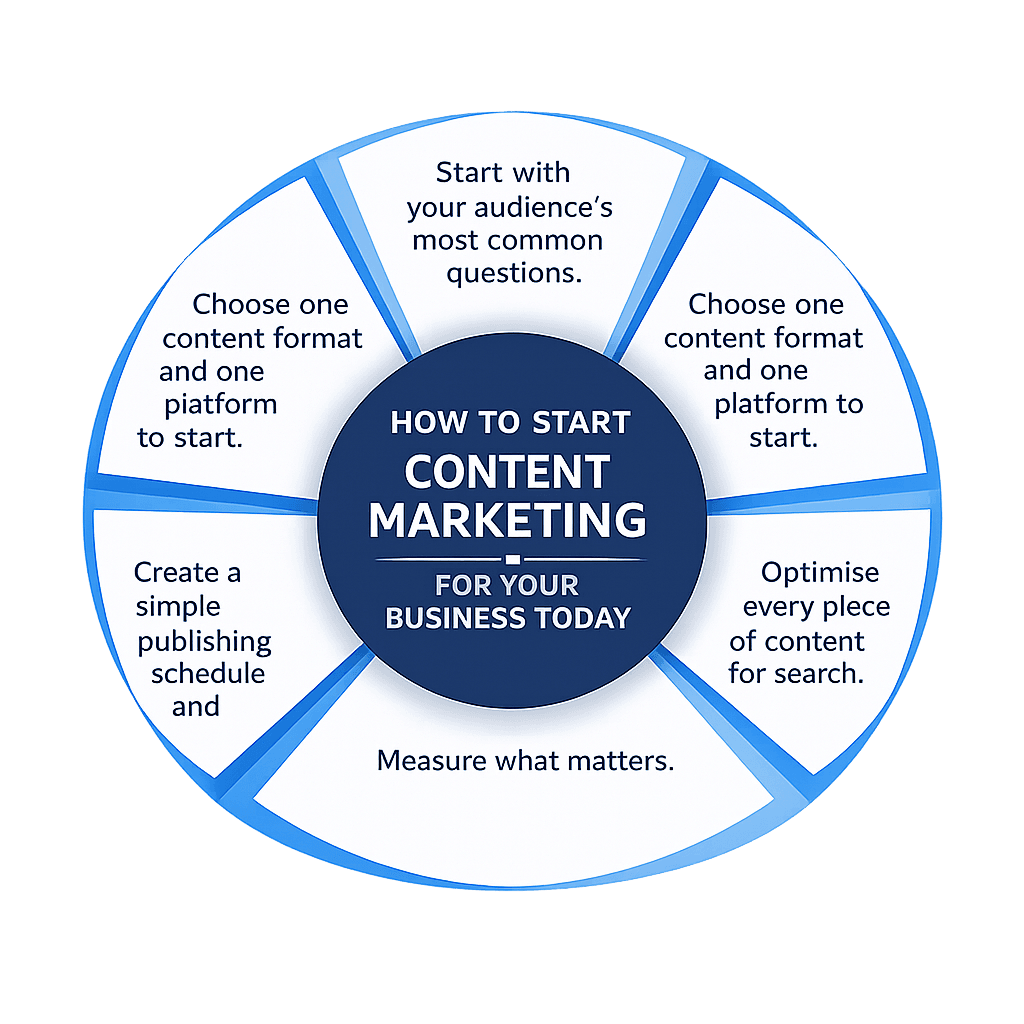
Start with your audience’s most common questions.
What do your potential customers ask you most often? What problems do they struggle with? These questions are the starting point for your entire content strategy.
Choose one content format and one platform to start.
Do not try to be everywhere at once. If you write well, start a blog. If you are comfortable on camera, start a YouTube channel. Master one format before expanding to others.
Create a simple publishing schedule and stick to it.
Even one piece of genuinely useful content per week, published consistently over twelve months, will build a meaningful content library that attracts and converts customers reliably.
Optimise every piece of content for search.
Research the keywords your target audience uses and incorporate them naturally into your content. SEO-optimised content continues attracting new visitors for months and years after publication.
Measure what matters.
Track website traffic, email subscribers, social media engagement, and enquiries generated from content. Review these metrics monthly. Identify what is working and do more of it.
Conclusion
Content marketing is not about being the loudest brand — it is about being the most helpful one. By consistently creating valuable content across platforms like Instagram , blogs, and social media, businesses can build trust, establish authority, and attract loyal customers over time.
While content marketing requires patience and commitment, the long-term benefits in visibility, credibility, and growth make it one of the most powerful marketing strategies today.
Start small. Create content that genuinely helps your audience.
Provide value first. Build trust next. Grow your business naturally.