Introduction
Building a mobile app sounds exciting. But for most business owners, it quickly becomes overwhelming — confusing technical conversations, unexpected costs, missed deadlines, and an end result that does not match what they originally imagined.
The problem is almost never the idea. The problem is not knowing how to get mobile app development services the right way — without the right knowledge, the right process, and the right partner.
This guide gives you everything you need to know about how to get mobile app development services right the first time — saving you time, money, and the frustration of having to start over.
Simple Guide to Mobile App Development Services
Most business owners think they know how to get mobile app development services — they simply find a developer and ask them to build an app. In reality the process is far more comprehensive than most people expect.
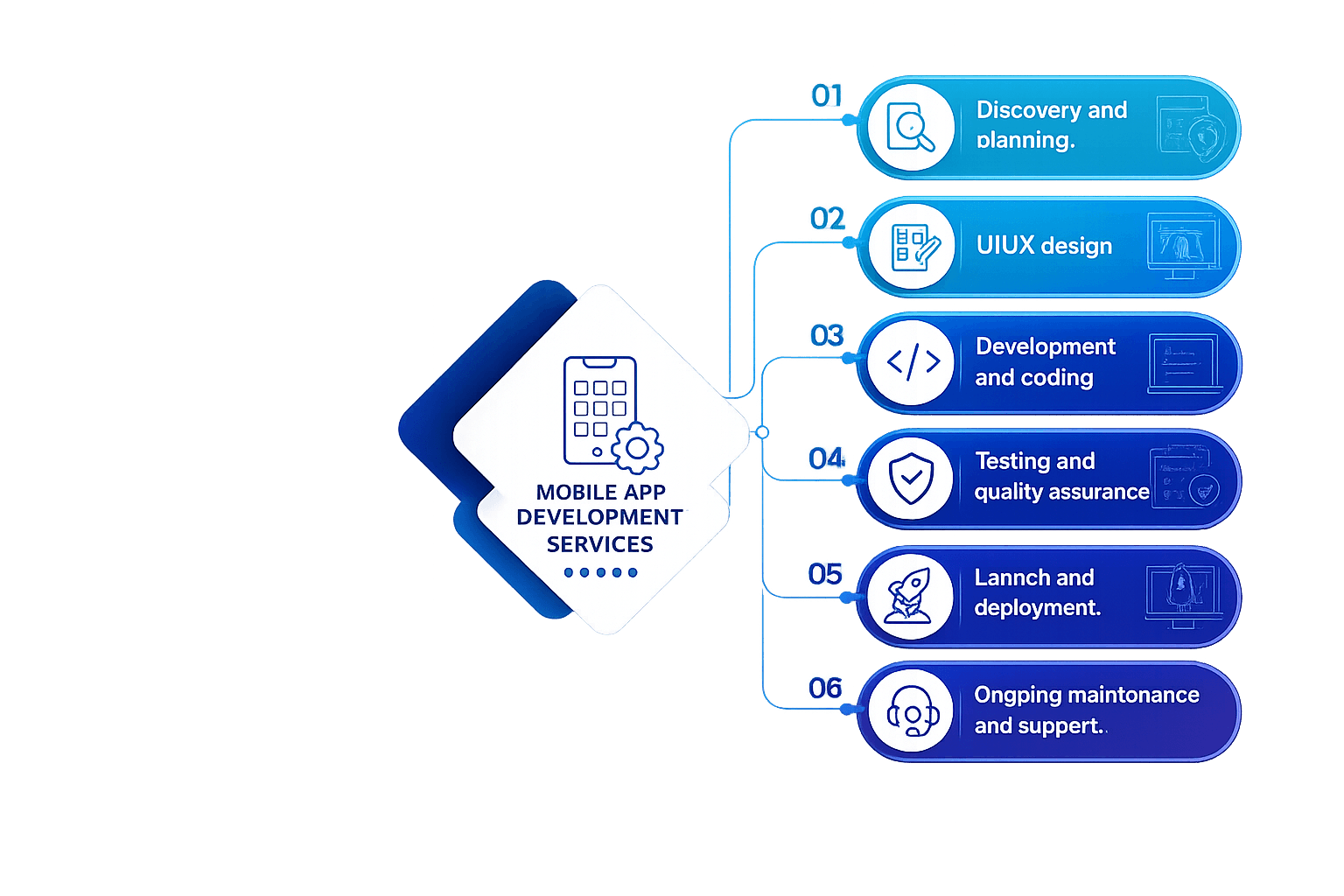
Discovery and planning.
Before a single line of code is written, professional mobile app development services begin with a deep understanding of your business goals, your target users, and the specific problem your app needs to solve. This planning phase is the most important part of the entire process.
UI and UX design.
The design phase creates the visual layout and user experience of your app — how it looks, how it feels, and how users move through it. Good design makes an app intuitive and enjoyable to use. Poor design makes users delete it immediately.
Development and coding.
This is where the app is actually built — the technical work of creating all the features, functions, and connections that make your app work. Professional mobile app development services use experienced developers who write clean, reliable code that performs well under real-world conditions.
Testing and quality assurance.
Before launch, every feature of your app is tested thoroughly across multiple devices and operating systems to identify and fix any bugs, crashes, or performance issues. Skipping this phase is one of the most costly mistakes a business can make.
Launch and deployment.
Getting your app live on the Apple App Store and Google Play Store involves specific technical requirements and approval processes. Professional mobile app development services handle all of this on your behalf.
Ongoing maintenance and support.
After launch, your app needs regular updates, bug fixes, and improvements. Mobile app development services should include a clear plan for ongoing maintenance — not just the initial build.
Why Most Mobile App Projects Fail
Understanding why mobile app projects fail is just as important as knowing how to get mobile app development services right. These are the most common reasons businesses end up with an app that does not work.
No clear purpose.
Many businesses build an app because their competitors have one — not because it solves a specific problem for their customers. An app without a clear purpose will never gain traction, regardless of how well it is built.
Unclear requirements from the start.
When a business cannot clearly explain what they want the app to do, who it is for, and what success looks like, the development team cannot build the right product. Vague requirements lead to wrong results every single time.
Choosing the cheapest option.
Mobile app development services are a significant investment. Choosing a provider based on price alone almost always results in poor quality code, missed features, and an app that needs to be completely rebuilt — costing far more in the long run.
Ignoring the user experience.
An app that is difficult to use, slow to load, or confusing to navigate will be deleted within minutes of being downloaded. User experience must be a priority from the very first day of planning.
No post-launch plan.
Many businesses treat their app as a finished product the moment it launches. In reality launch is just the beginning. Without ongoing updates, marketing, and improvements, most apps fail to gain or retain users.
How to Choose the Right Mobile App Development Services
Knowing how to get mobile app development services is one thing — knowing how to choose the right provider is another. Here is what to look for.
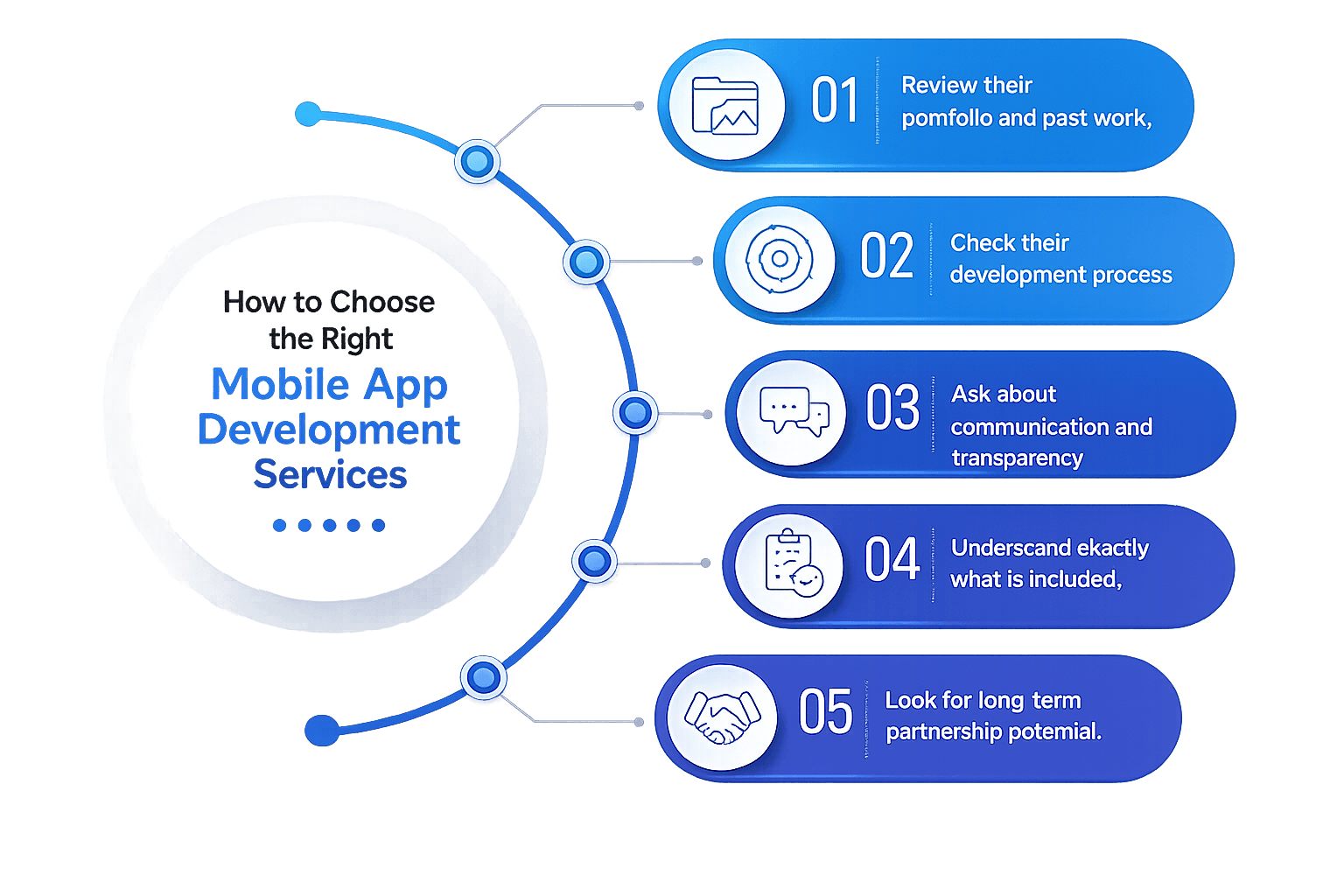
Review their portfolio and past work.
Ask to see the apps they have previously built. Download them. Use them. Evaluate the quality of the design, the smoothness of the experience, and the performance across different devices. Past work is the most reliable indicator of future quality.
Check their development process.
A professional mobile app development services provider will have a clear, structured process — from discovery and planning through to launch and maintenance. Avoid any provider who jumps straight to building without thorough planning first.
Ask about communication and transparency.
You should receive regular updates throughout the development process. Ask how often you will receive progress reports, who your main point of contact will be, and how changes and feedback are handled during the project.
Understand exactly what is included.
Does the quote include both iOS and Android versions? Does it include design, testing, and deployment? Does it include any post-launch support? Understand every detail of what you are paying for before signing any agreement.
Look for long-term partnership potential.
Your app will need ongoing updates and improvements after launch. Choose a mobile app development services provider who is interested in a long-term relationship — not just completing a one-time project and moving on.
Common Mobile App Development Problems and How to Fix Them
The app does not work as expected after launch.
Features are missing, bugs appear, or the app crashes on certain devices — leaving users frustrated and leaving your business with a damaged reputation.
Solution. Invest in thorough testing before launch. Insist on a dedicated quality assurance phase in your mobile app development services agreement. Test on multiple real devices — not just simulators — before the app goes live to the public.
The development costs keep increasing beyond the original quote.
Scope creep — adding new features and changes during development — is the most common cause of budget overruns in mobile app projects.
Solution. Define your app’s requirements as clearly and completely as possible before development begins. Create a detailed scope document that both you and your development partner agree on and sign. Any changes to the scope should be formally agreed and costed before being implemented.
The app is built, but nobody is using it.
Many businesses focus entirely on building the app and forget entirely about how they will market it and attract users once it is live.
Solution:
Create a launch and marketing plan before development starts, including how you will acquire users, onboard them smoothly, and retain them long-term; use channels like App Store Optimization (ASO), social media marketing, and email campaigns to drive consistent app downloads and engagement.
The app becomes outdated quickly after launch.
Operating system updates, new device sizes, and changing user expectations mean that an app that works perfectly today can feel broken and outdated within twelve months without regular maintenance.
Solution. Include a maintenance and update agreement as part of your mobile app development services from the very beginning. Budget for regular updates, performance improvements, and new features as part of your overall app investment — not as an afterthought.
Simple Tips for Getting Mobile App Development Services Right
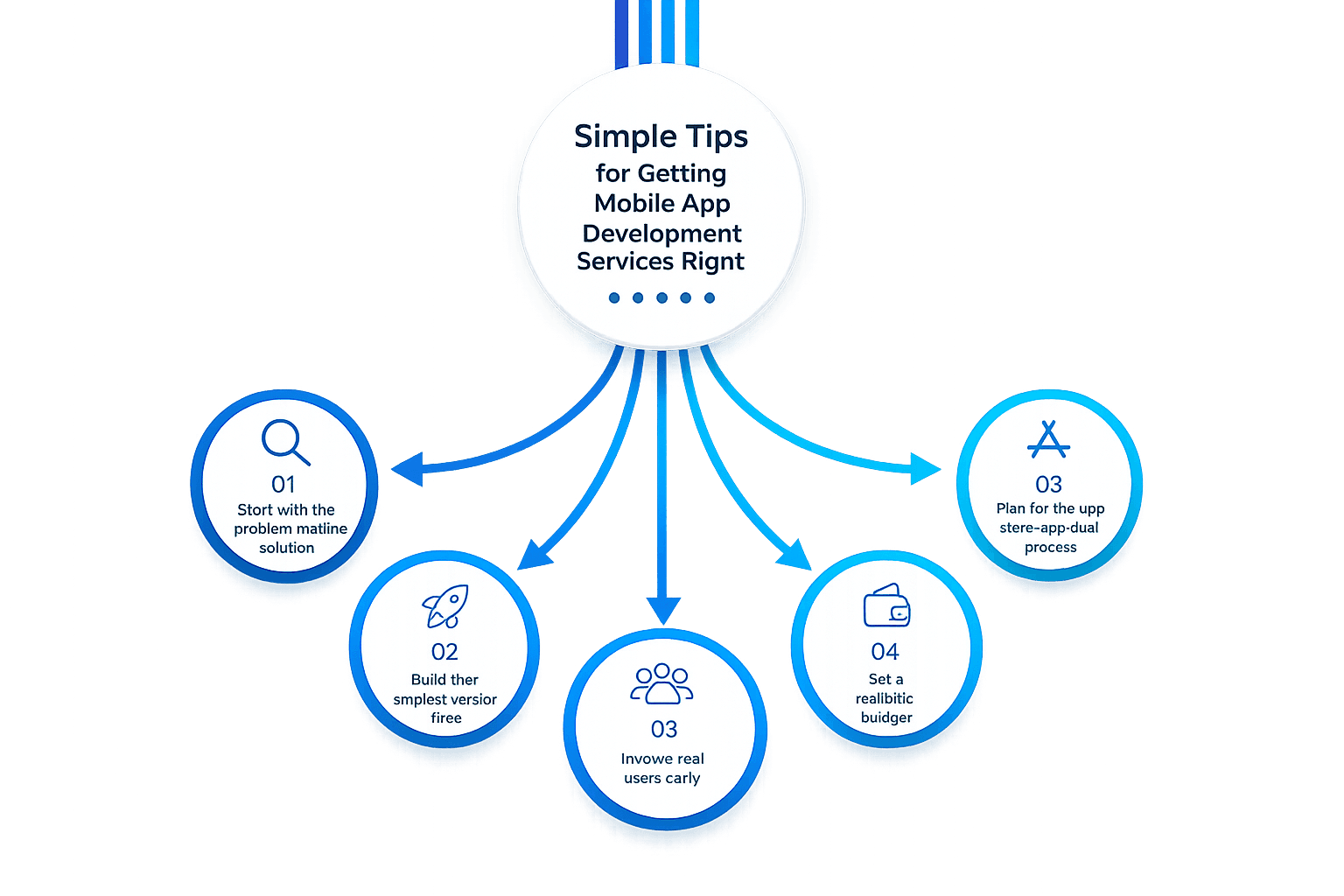
Start with the problem, not the solution.
Before thinking about features and design, clearly define the specific problem your app will solve for your target users. Every decision that follows should serve that core purpose.
Build the simplest version first.
Do not try to build every feature you have ever imagined in version one. Start with the core features that deliver the most value — get feedback from real users — then improve and expand from there.
Involve real users early.
Share early designs and prototypes with real potential users before development begins. Their feedback will save you from building features nobody wants and missing features everybody needs.
Set a realistic budget.
Quality mobile app development services require a realistic investment. Research typical costs for your type of app and budget accordingly. Underinvesting in the build almost always leads to higher costs later.
Plan for the app store approval process.
Both Apple and Google have review processes that can take days or weeks. Factor this into your launch timeline so unexpected delays do not derail your plans or commitments.
Follow us on LinkedIn for mobile app development updates and insights.
FAQ
Q1: Why do many mobile app projects fail on the first attempt?
A: Unclear requirements, poor planning, and a lack of defined objectives are the main reasons.
Q2: How can I ensure my app idea is developed successfully?
A: Create a detailed project brief outlining features, goals, and user expectations before development begins.
Q3: What is the biggest mistake businesses make when hiring app developers?
A: Choosing a developer based solely on cost instead of experience, expertise, and project quality.
Q4: Why do mobile app projects exceed budgets and deadlines?
A: Frequent scope changes and inadequate project planning often lead to delays and additional costs.
Q5: How can I avoid app performance and compatibility issues?
A: Test the app thoroughly across multiple devices, operating systems, and screen sizes.
Q6: Why is user experience (UX) important for a mobile app?
A: A seamless user experience increases engagement, satisfaction, and user retention.
Q7: How can I improve communication during the app development process?
A: Use clear documentation, regular progress updates, and structured communication channels.
Conclusion
Knowing how to get mobile app development services right the first time is entirely possible — but it requires the right knowledge, the right process, and the right partner.
Start with a well-defined business objective, choose a trusted mobile app development company in Coimbatore, document your requirements thoroughly, and ensure comprehensive testing before launch. Equally important is planning for future updates, user growth, and ongoing support.
By following these best practices and partnering with the right development team, your mobile app can become a powerful business tool that improves customer engagement, streamlines operations, and delivers long-term value every day.