Introduction
Every business wants more leads, more customers, and more sales.
That is why businesses invest heavily in social media, SEO, email marketing, paid advertising, and content creation. Yet despite all this activity, many companies fail to achieve meaningful results.
The problem is not digital marketing itself. The problem is poor digital marketing strategies.Many businesses jump from one tactic to another without a clear plan. They chase trends, copy competitors, and expect immediate results. When those results do not appear, they assume digital marketing does not work.
The reality is very different. Good digital marketing strategies create consistent growth, stronger brand visibility, and a steady flow of qualified leads. This guide explains why most strategies fail and how to build one that actually works.
Why Most Digital Marketing Strategies Fail
Many marketing campaigns fail not because businesses lack effort but because they lack direction.
No clear goals.
Businesses often launch campaigns without defining exactly what success looks like. More traffic, more followers, or more engagement may sound positive, but they are not specific business objectives.
Successful digital marketing strategies begin with measurable goals such as generating leads, increasing sales, improving website traffic, or boosting conversion rates.
Poor audience understanding.
Many businesses try to market to everyone. The result is messaging that connects with nobody.
Without understanding customer needs, pain points, and buying behaviour, marketing campaigns become ineffective and fail to generate results.
Focusing on tactics instead of strategy.
Posting on social media every day is not a strategy. Running Google Ads is not a strategy.
These are marketing tactics. A strategy defines why you are doing them, who you are targeting, and how they support your business goals.
Inconsistent marketing efforts.
Many companies start marketing enthusiastically and then stop after a few weeks when they do not see immediate results.
Effective digital marketing strategies require consistency. Growth comes from sustained effort over time, not occasional campaigns.
Ignoring performance data.
Digital marketing provides valuable insights, but many businesses fail to track results properly.
Without data, you cannot identify what is working, what is wasting money, or where improvements are needed.
What Effective Digital Marketing Strategies Actually Include:
Professional digital marketing strategies involve much more than posting content or running advertisements.
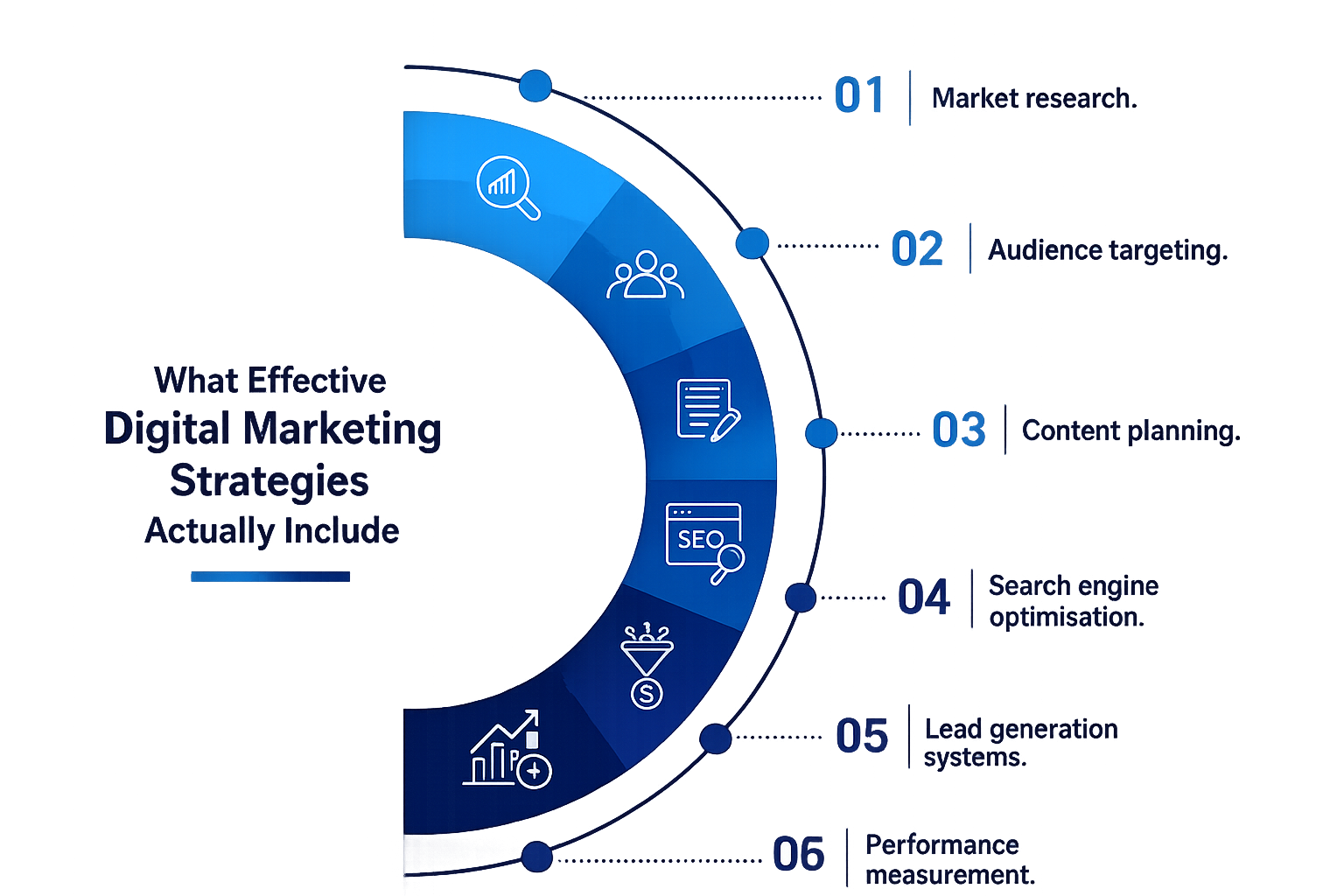
Market research.
Every successful strategy starts with understanding the market, competitors, and customer expectations.
Research helps businesses identify opportunities and position themselves effectively.
Audience targeting.
Knowing exactly who your ideal customer is allows you to create relevant content and campaigns that attract qualified leads.
Content planning.
Content should be created with purpose. Every blog, video, email, or social media post should support a larger business objective.
Search engine optimisation.
SEO helps businesses attract people actively searching for their products and services.
Strong digital marketing strategies include ongoing SEO improvements to increase organic visibility and traffic.
Lead generation systems.
Marketing should generate enquiries, not just website visitors.
Effective strategies include landing pages, contact forms, lead magnets, and conversion-focused design elements.
Performance measurement.
Tracking key metrics allows businesses to improve results continuously and maximise return on investment.
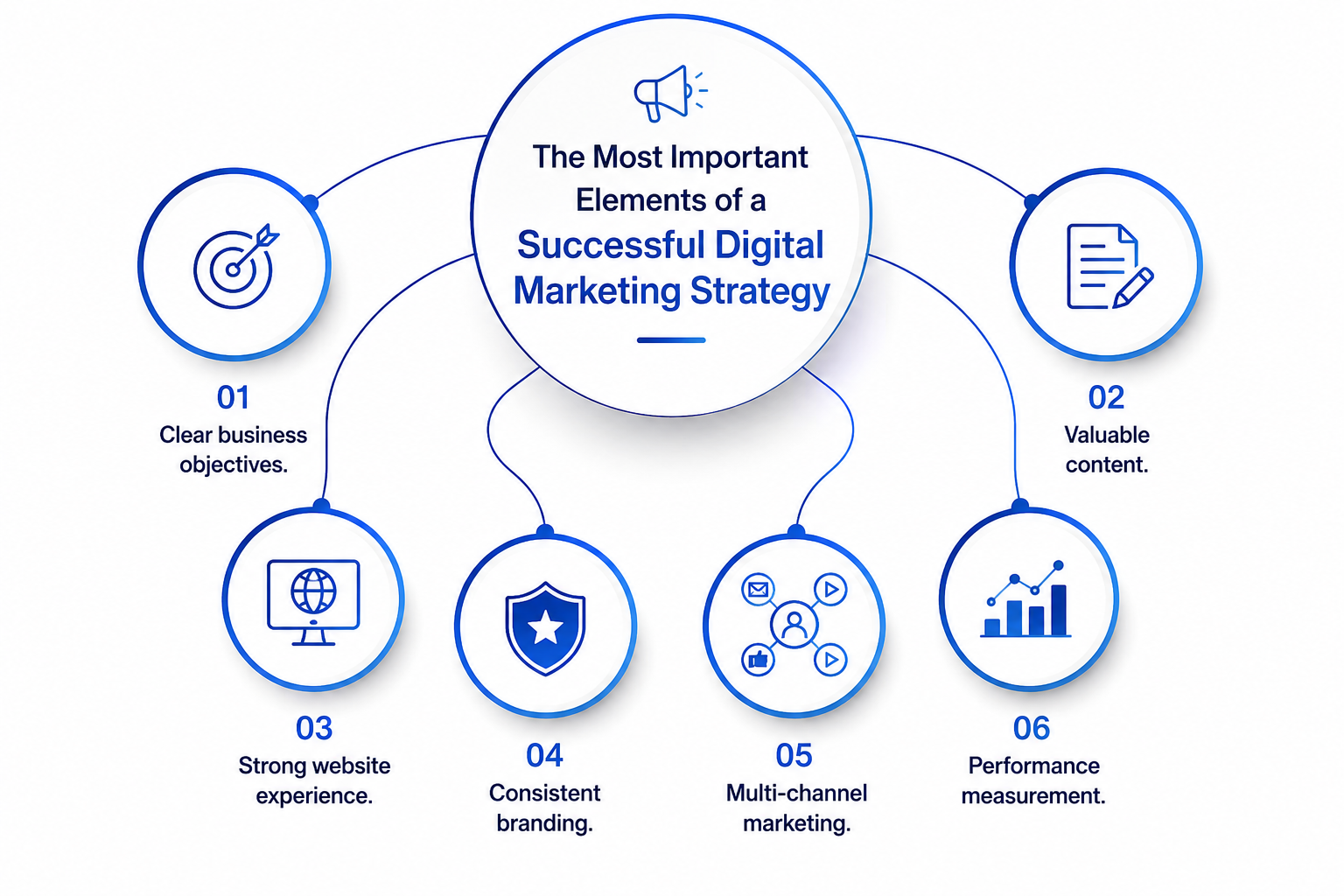
The Most Important Elements of a Successful Digital Marketing Strategy
Not all marketing activities contribute equally to business growth.
These elements often have the greatest impact.
Clear business objectives.
Every marketing activity should support a specific business goal.
Without clear objectives, campaigns become disconnected and difficult to measure.
Valuable content.
People engage with businesses that provide useful information.
High-quality content builds trust, establishes authority, and attracts potential customers throughout the buying journey.
Strong website experience.
Even the best marketing campaigns fail if visitors land on a confusing or poorly designed website.
Your website should be fast, mobile-friendly, easy to navigate, and designed to convert visitors into customers.
Consistent branding.
Consistency builds recognition and trust.
Your messaging, design, and brand identity should remain consistent across all marketing channels.
Multi-channel marketing.
Customers interact with businesses through multiple touchpoints.
Successful digital marketing strategies combine SEO, content marketing, social media, email marketing, and paid advertising to maximise reach.
—————————————————————————————————————————–
Key Signs Your Digital Marketing Strategy Needs Improvement
Many businesses continue investing in marketing without realising their strategy is underperforming.
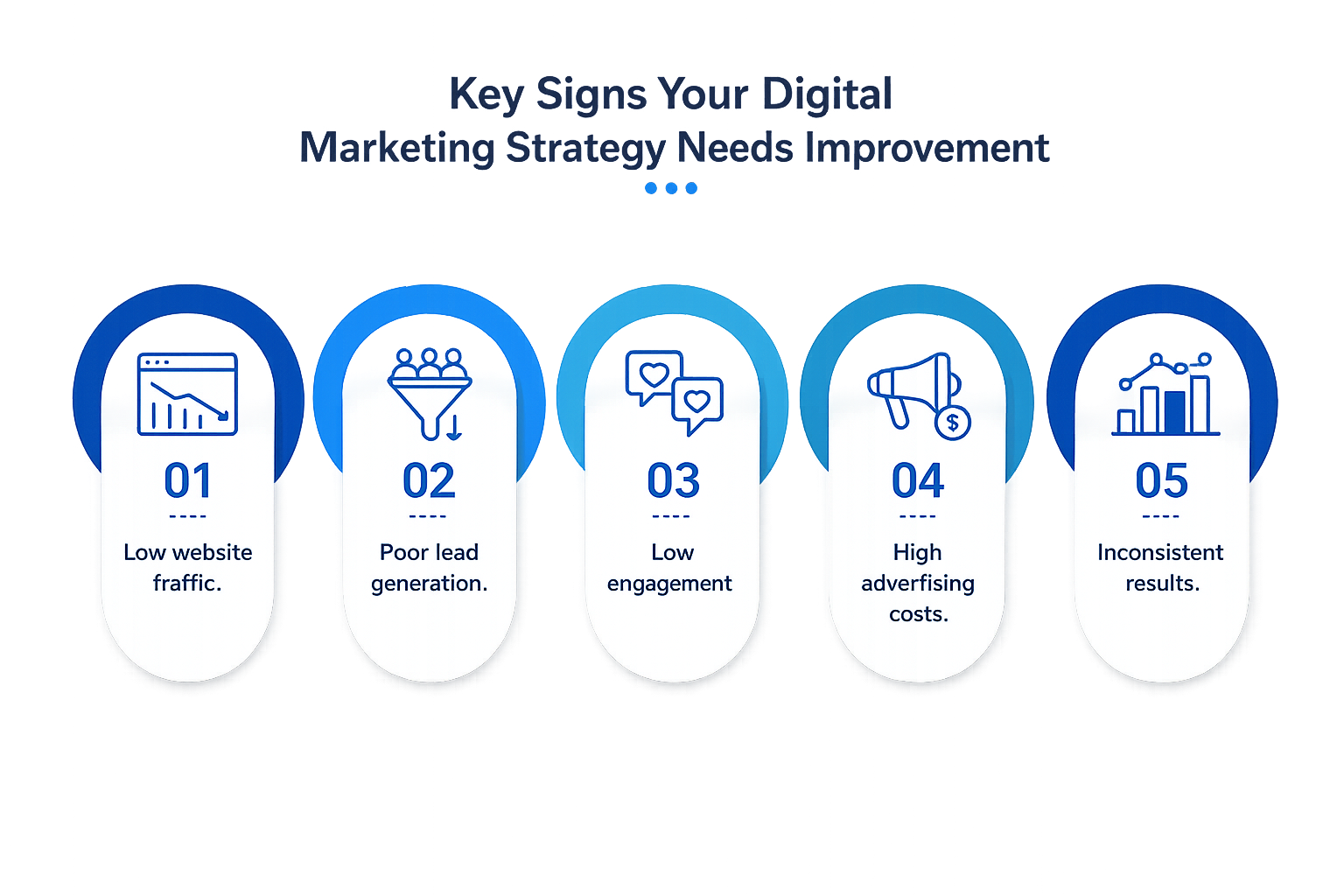
Low website traffic.
If your website receives very little traffic, your visibility is limited, and your strategy may not be reaching the right audience.
Poor lead generation.
Traffic without enquiries usually indicates conversion problems or weak targeting.
Low engagement.
If people rarely interact with your content, your messaging may not be relevant or valuable to your audience.
High advertising costs.
Rising advertising costs with poor results often signal inefficient targeting or weak campaign optimisation.
Inconsistent results.
If leads and sales fluctuate dramatically from month to month, your strategy may lack structure and long-term planning.
What to Expect From Professional Digital Marketing Strategies
Businesses often achieve better results when they follow a structured marketing process.
Discovery and planning.
Marketing professionals begin by understanding your business, industry, customers, and goals.
Strategy development.
A customised plan is created based on your objectives, audience, and available resources.
Campaign execution.
Once the strategy is in place, marketing activities such as content creation, SEO, social media marketing, paid advertising, and lead generation campaigns are implemented to achieve the defined business goals.
Monitoring and optimisation.
Campaign performance is continuously analysed to identify opportunities for improvement.
Long-term growth support.
Marketing is an ongoing process. Professional strategies evolve as customer behaviour, technology, and business goals change.
FAQ
1. Why do most digital marketing strategies fail?
Most strategies fail because businesses lack clear goals, proper audience research, consistent execution, and performance tracking.
2. How long does it take for digital marketing strategies to show results?
Results vary depending on the channel. SEO may take several months, while paid advertising can generate quicker outcomes.
3. What is the most important part of a digital marketing strategy?
Understanding your target audience is one of the most important factors because it influences every marketing decision.
4. Do small businesses need digital marketing strategies?
Yes. A clear strategy helps small businesses compete effectively and maximise their marketing budget.
5. How often should a digital marketing strategy be updated?
Strategies should be reviewed regularly and adjusted based on performance data, industry changes, and business goals.
6. Why is content important in digital marketing?
Content helps attract visitors, build trust, improve SEO performance, and guide customers through the buying process.
7. Can digital marketing work without SEO?
Yes, but SEO provides long-term visibility and sustainable traffic that supports overall marketing success.
8. What metrics should businesses track?
Important metrics include website traffic, leads, conversion rates, customer acquisition costs, and return on investment.
9. Why is consistency important in digital marketing?
Consistent marketing builds brand awareness, trust, and long-term customer relationships.
10. Should businesses use multiple marketing channels?
Yes. Multi-channel marketing helps reach customers across different platforms and improves overall campaign effectiveness.
Conclusion
Most digital marketing strategies fail because they focus on activities rather than outcomes. Businesses often invest in marketing channels without understanding their audience, defining goals, or measuring performance.
Successful digital marketing strategies are built on research, planning, consistency, and continuous improvement. They align every marketing activity with clear business objectives and focus on creating value for potential customers.
When done correctly, digital marketing becomes more than just promotion. It becomes a predictable system for generating leads, building brand authority, and driving long-term business growth.