
Introduction
Social media marketing has become an essential part of business growth in the digital age. It helps businesses connect with their target audience, increase brand visibility, and build meaningful customer relationships. With billions of users active on social platforms every day, businesses have more opportunities than ever to reach potential customers. A well-planned social media strategy can drive engagement, generate leads, and support long-term business success.
Why Social Media Marketing Matters for Your Business
Billions of people use social media marketing every day to discover products, read reviews, and connect with brands. Your potential customers are already spending time on these platforms. A strong social media presence helps ensure your business is visible when they are ready to engage or make a purchase.
Here is why social media marketing matters:
It builds brand awareness.
People buy from brands they recognise and trust. Consistent social media presence puts your business in front of the right people repeatedly until they remember you.
It drives website traffic.
Every post, story, reel, or video is an opportunity to direct your audience to your website, your product page, or your contact form.
It generates leads and sales.
Social media is not just for visibility. With the right content strategy, it directly brings in enquiries, leads, and paying customers.
It is cost-effective.
You can start with absolutely zero budget. Even social media advertising is significantly cheaper than traditional advertising methods like television, radio, or print.
It builds customer trust.
When a business consistently engages with its audience, responds to comments, answers questions, and shares real content, customers feel a genuine connection — and trust leads to sales.
It levels the playing field.
A small business with a great social media strategy can outperform a large company with a poor one. The quality of your content matters far more than the size of your budget.
Which Social Media Platform Should You Use
The biggest mistake beginners make is trying to be everywhere at once. They create profiles on five platforms, run out of content ideas within two weeks, and abandon them all.
The smarter approach is to choose one or two platforms where your target audience spends the most time — and focus all your energy there.
Instagram is best for visual businesses. If your product or service is something people can see — food, fashion, beauty, fitness, interior design, travel — Instagram is your platform. Reels, stories, and posts all work well here.
Facebook is best for local businesses and community-based marketing. Facebook groups, business pages, and local advertising make it ideal for businesses targeting a specific geographic area or demographic.
LinkedIn is best for B2B businesses, professional services, consultants, coaches, and anyone whose customers are other businesses or professionals. It is the most powerful platform for building professional credibility and generating B2B leads.
YouTube
YouTube is best for educational and long-form video content. If you can teach, demonstrate, or explain something valuable on video, YouTube can build long-term authority and drive organic traffic for years after a video is published.
X (formerly Twitter)
X is best for real-time conversation, news, opinions, and thought leadership. It works particularly well for tech, media, and brands with a strong, distinctive voice.
Tip: Ask yourself — where do my ideal customers spend their time online? Go there first. Master it. Then expand to other platforms only when you are consistently producing good content on your primary platform.
How to Set Up Your Social Media Profile
Your social media profile is the first impression of your business, so it should clearly communicate who you are and what you offer. A well-optimized profile builds trust and encourages visitors to follow or contact you.
Profile Setup Tips
- Use a clear, high-quality profile picture (logo for businesses)
- Write a simple bio explaining who you are, what you do, and who you help
- Add a website or landing page link
- Maintain consistent branding across platforms
- Complete all available profile details
A properly set-up profile improves credibility and helps turn visitors into potential customers.
Understanding Your Target Audience
Before creating content, it’s important to understand who your ideal customers are. Knowing their interests, challenges, preferences, and online behavior helps you create content that resonates with them and drives better engagement.
Ask yourself: Who are they? What problems do they face? Which platforms do they use? What information are they looking for?
Tips
Analyze your existing customers to identify common traits, interests, and needs. Use these insights to create content that speaks directly to your target audience.
What to Post on Social Media
Creating content becomes easier when you focus on what your audience finds valuable, relevant, and engaging. A balanced content strategy can help build trust, increase engagement, and grow your brand.
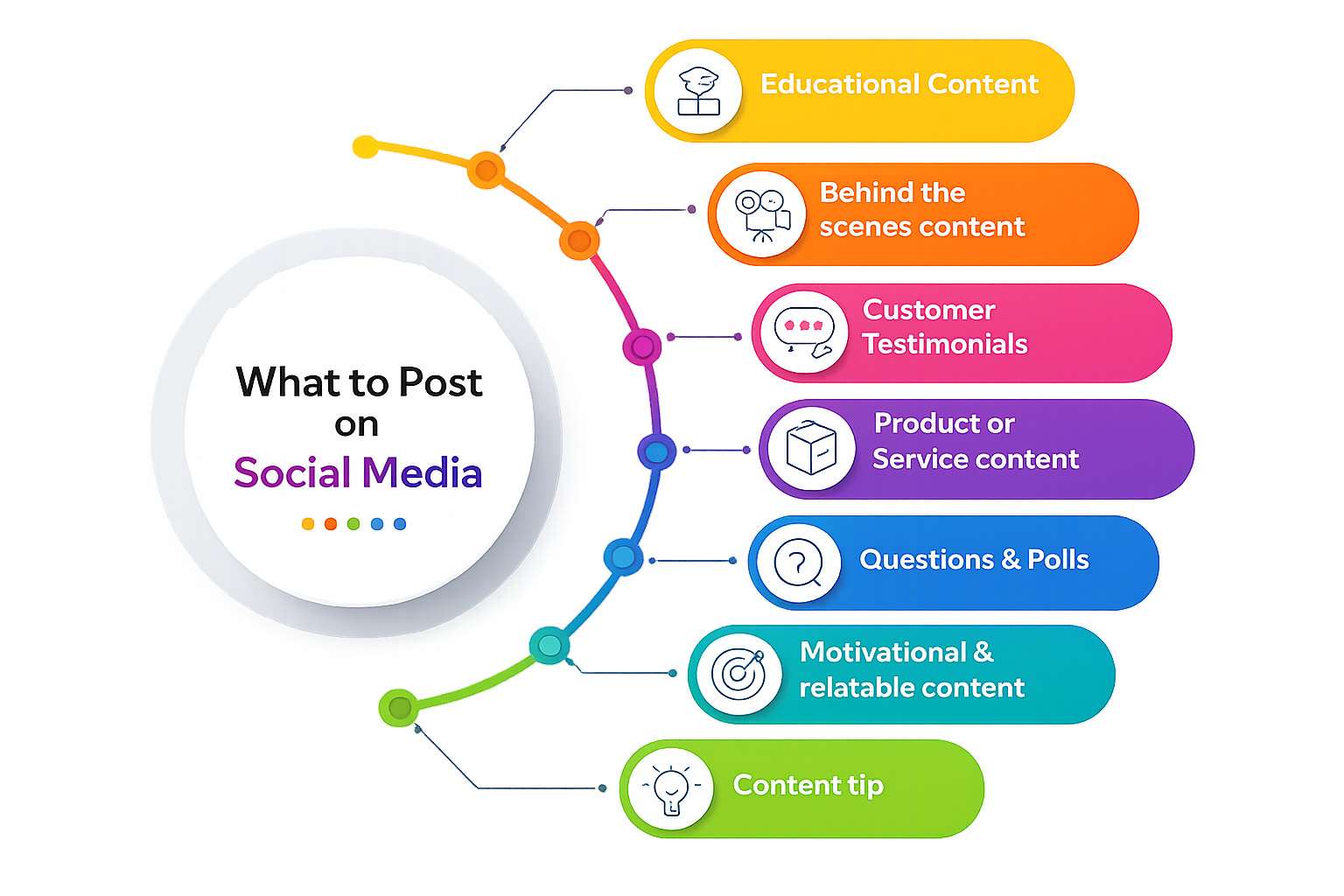
Educational Content
Share tips, guides, and industry insights to educate your audience and establish expertise.
Behind-the-Scenes Content
Show your team, workspace, or daily processes to create authenticity and humanize your brand.
Customer Testimonials
Highlight real customer experiences to build trust and social proof.
Product or Service Content
Showcase how your products or services solve customer problems and deliver value.
Questions and Polls
Encourage interaction by asking questions and gathering audience opinions.
Motivational and Relatable Content
Share inspiring or relatable posts that connect emotionally with your audience.
Content Tip
Follow the 80/20 rule: 80% of your content should educate, inform, or entertain, while only 20% should focus on direct promotion.
How to Write Captions That People Actually Read
A compelling caption can increase engagement and encourage action. Start with a strong opening line to capture attention, write in a natural and conversational tone, and focus on a single message. Most importantly, include a clear call to action that tells your audience what to do next.
Caption Writing Tips
- Start with an attention-grabbing first line
- Write in a conversational tone
- Include a clear call to action
- Keep your message focused and concise
Well-written captions help turn views into meaningful engagement and customer actions.
How Often Should You Post
Consistency matters far more than frequency. Posting three times a week every week for six months will always outperform posting every day for three weeks and then disappearing.
Here is a simple and sustainable posting guide for beginners:
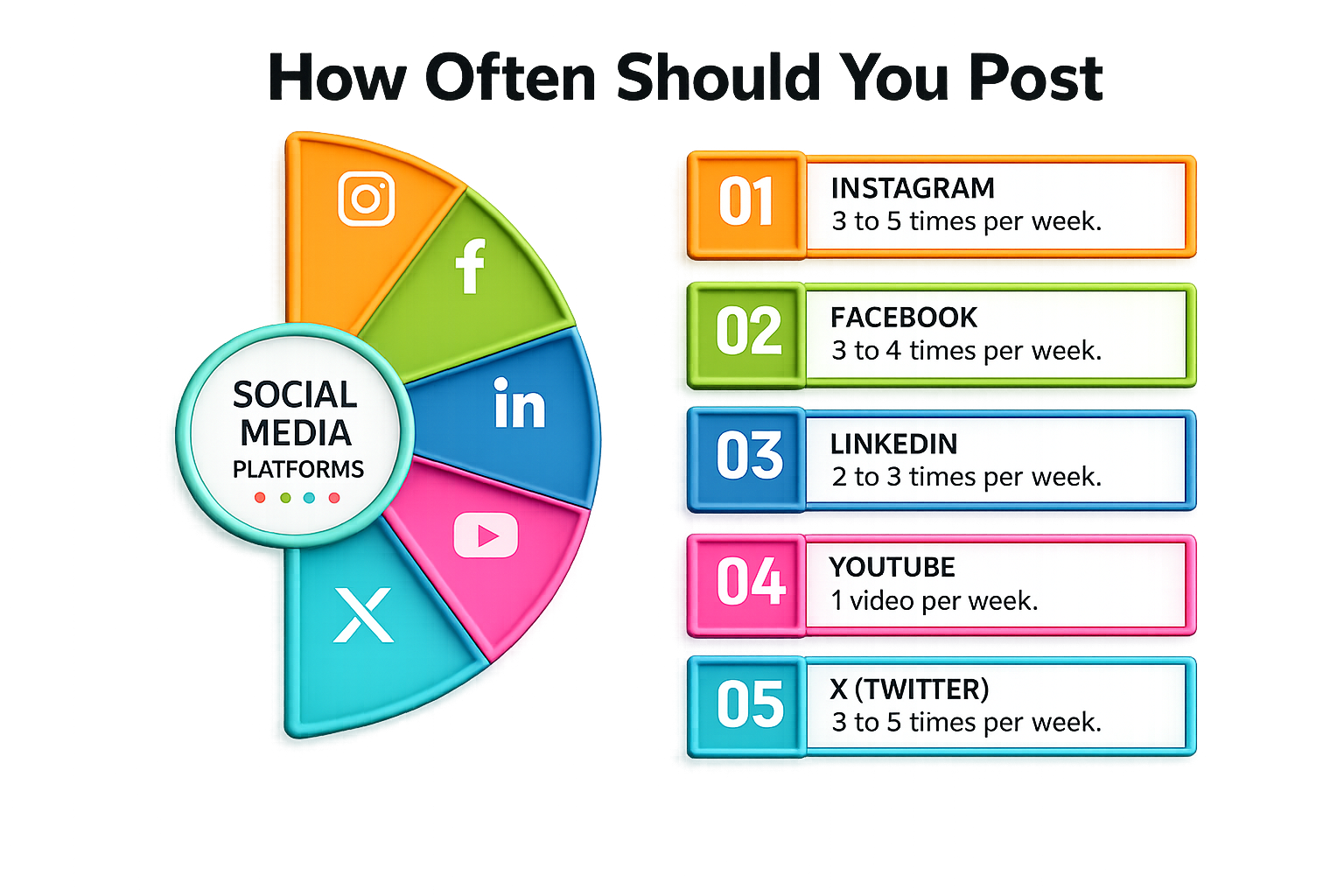
Instagram — 3 to 5 times per week.
Facebook — 3 to 4 times per week.
LinkedIn — 2 to 3 times per week.
YouTube — 1 video per week.
X (Twitter) — 3 to 5 times per week.
Start with a schedule that feels manageable. It is far better to commit to three posts a week and stick to it than to aim for daily posting and burn out within a month.
Tip: Batch your content creation. Set aside two to three hours one day a week to create all your content for the week ahead. Schedule it using a tool like Buffer or Later. This removes the daily pressure of figuring out what to post.
How to Grow Your Followers Organically
Building an engaged social media following takes consistency and genuine interaction. Post regularly, use relevant hashtags, and engage with your audience through comments and messages. Collaborating with industry partners and sharing user-generated content can also help expand your reach.
Tips for Organic Growth
- Post consistently
- Use relevant hashtags
- Engage with your audience
- Collaborate with others in your industry
- Share customer-generated content
- Post when your audience is most active
By following these practices, you can steadily grow a loyal and engaged community around your brand.
How to Use Hashtags Effectively
Hashtags help increase the visibility of your content and make it easier for the right audience to discover your posts. The key is to use relevant hashtags that align with your content and target audience.
Hashtag Best Practices
- Use a mix of popular and niche hashtags
- Choose hashtags relevant to your content
- Research hashtags before using them
- Focus on quality over quantity
Using the right hashtags can improve reach, attract targeted audiences, and enhance your overall social media marketing performance.
How to Measure Social Media Success
Tracking performance helps you understand what is working and where improvements are needed. By monitoring key metrics, you can make informed decisions and improve your social media strategy over time.
Key Metrics to Track
- Reach: Number of unique people who see your content.
- Engagement Rate: Likes, comments, shares, and saves relative to your audience size.
- Follower Growth: Tracks how your audience is growing over time.
- Website Clicks: Measures traffic driven from social media to your website.
- Conversions: Tracks actions such as purchases, form submissions, or bookings.
Regularly reviewing these metrics helps optimize your content and achieve better marketing results.
FAQ
Q1. Is social media marketing free?
Yes. Creating a profile and posting content is completely free on all major platforms. Paid advertising is optional. Many businesses build strong social media presences entirely without paid ads, especially in the early stages.
Q2. Which platform is best for social media marketing?
It depends on where your audience spends time. Instagram suits visual brands. LinkedIn is best for B2B. Facebook works well for local businesses. YouTube is ideal for educational content. Start with one and master it before expanding.
Q3. How long does it take to see results?
Most businesses see meaningful results after three to six months of consistent effort. Social media marketing is a long-term strategy. Early results may be small, but they compound significantly over time.
Q4. How many times should I post per week?
Start three to four times per week on your main platform. Consistency matters more than frequency. A sustainable posting schedule always beats an intense one that burns out quickly.
Q5. Do I need to run paid ads?
No. Organic social media marketing can deliver strong results with the right content and consistency. Paid ads help accelerate growth but are not required to get started or see meaningful results.
Final Thought
Social media success comes from consistency, valuable content, and genuine audience engagement. Focus on understanding your customers, posting regularly, and continuously improving your strategy based on results. Start today, stay committed, and over time, social media can become a powerful source of leads, customers, and business growth.